

Food Stations That Bring Guests Together
A formal three-course meal has its place, but it does not suit every celebration. Food stations create a different kind of energy: guests can browse, choose, chat and return for another favourite while the room feels lively rather than regimented. For weddings, private parties and corporate occasions, well-planned food stations can turn catering from part of the schedule into a real part of the experience.
The appeal is not simply variety. It is the care behind it. A station needs to look inviting, hold at the right temperature, work around dietary requirements and be placed so that guests can move naturally through the space. When those details are handled properly, the result feels generous, relaxed and beautifully considered.
Why food stations work so well at events
Food stations give guests more choice without making service feel complicated. Someone who wants a substantial plate can build one, while a guest who would rather graze can take smaller portions and come back later. This is particularly useful when guest lists include different ages, appetites and dietary needs.
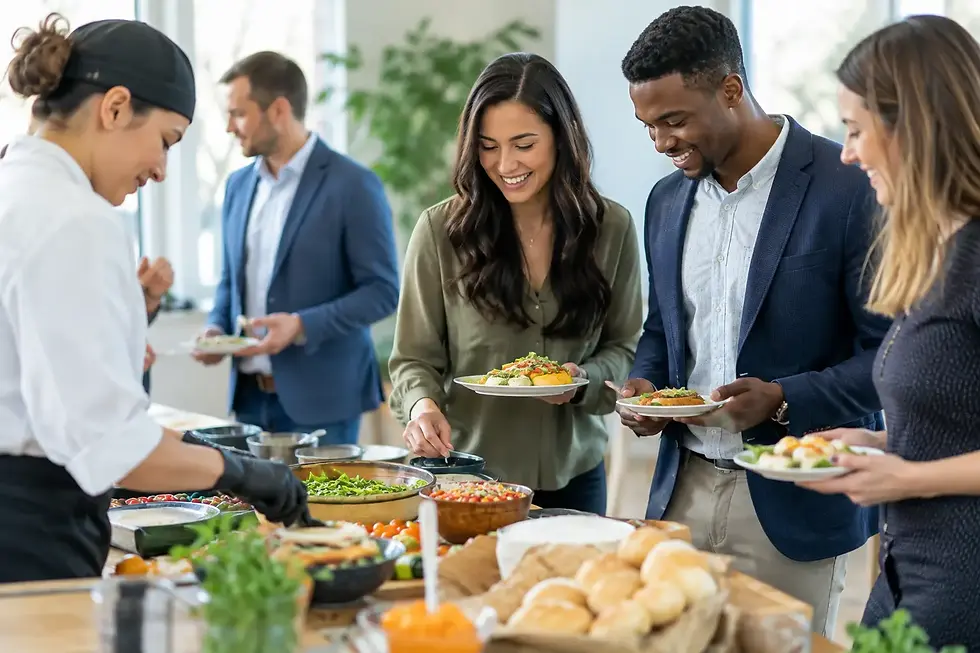
They also help people mingle. At a wedding, guests who have not met before often strike up conversation while choosing toppings or watching a dish being finished. At a corporate event, stations provide a natural break from presentations and a more sociable alternative to everyone collecting the same plated meal at once.
For hosts, the format can be wonderfully flexible. A food station can be the main meal, a generous evening offering, or one element within a wider menu. The right choice depends on the timing, venue layout and atmosphere you want to create. A black-tie dinner may call for seated courses with a late-night station, for example, while a garden celebration might be better suited to a collection of relaxed, abundant stations from the outset.
Choosing food stations for your occasion
The best starting point is not a list of fashionable dishes. It is the feeling you want guests to take away. Think about the season, how formal the event is, whether guests will be seated or standing, and how long they will have to eat. A station that looks exceptional in a spacious barn may need adapting for a compact reception room or an outdoor event with limited power.
For a summer wedding, a vibrant Mediterranean-inspired spread with seasonal salads, grilled vegetables, slow-roasted meats and fresh breads can feel easy and celebratory. In cooler months, guests often appreciate something more comforting, such as a warming bowl-food station, carved meats with seasonal accompaniments, or a carefully prepared pie and mash service elevated with thoughtful sides.
Interactive options add theatre when they are managed well. A chef finishing dishes in front of guests, a build-your-own taco station, or a pasta station with sauces and seasonal toppings gives people a reason to pause. However, interaction should never mean long queues. The menu, equipment and staffing must be scaled to the guest count so that the experience remains smooth.
Dessert stations are equally effective. Rather than serving one plated pudding, you might offer miniature desserts, local cheeses, fruit and coffee accompaniments. This suits guests who prefer a lighter finish and gives the evening a sense of occasion without slowing the room down.
Let the menu tell one clear story
Choice is welcome, but too many unrelated dishes can make a menu feel unfocused. A strong station menu has a thread running through it: a shared cuisine, a seasonal ingredient, a favourite holiday destination, or simply a style of generous British entertaining.
That does not mean every dish needs to be identical in flavour. It means the food should belong together visually and practically. A smoky barbecue station might sit naturally alongside fresh slaws, charred corn, salads and vibrant sauces. A Sussex-inspired menu could bring together locally sourced produce, excellent breads, cheeses and ingredients at their seasonal best.
A bespoke caterer can help you find this balance. The aim is to reflect your tastes while making sure every element works in a busy event setting, from the first plate served to the final guest arriving at the station.
Planning the flow around food stations
The most attractive display can still become frustrating if it is positioned poorly. Before finalising a menu, consider where guests will enter the room, collect drinks, sit down and move between spaces. Food should be easy to find without blocking the bar, doorways or dance floor.
For larger events, it is often better to repeat key dishes across two points rather than create one large queue. Stations can also be staggered: start with canapés or a lighter grazing display, open the main food stations once guests are ready to eat, then introduce desserts later. This keeps the occasion moving and gives each part of the menu its moment.
Staffing matters just as much as layout. Some stations need a chef or server to portion food, replenish platters and answer questions about ingredients. Others can be designed for guests to help themselves. Neither approach is automatically better. Served stations feel more polished and help with portion control, while self-service can feel informal and welcoming. The right approach depends on your event and your guests.
At Marks Meals, planning includes the practical work behind the scenes: equipment, timings, service, clearing and take-down. That operational care gives hosts the freedom to enjoy their own event rather than wondering whether the food is being replenished or where the used plates are going.
Dietary requirements deserve a proper place
A thoughtful station menu does not treat vegetarian, vegan or gluten-free guests as an afterthought. The most successful approach is to include dishes that everyone would be pleased to choose, rather than isolating alternatives in a small corner of the display.
Clear, discreet labelling helps guests feel confident. It is also vital that the catering team understands ingredients, allergens and how food has been prepared. Where cross-contamination is a concern, separate utensils, service arrangements and preparation methods need to be agreed in advance.
This is one area where early communication makes a real difference. Confirm dietary requirements before the event, then build them into the menu and service plan from the beginning. A well-designed station should allow every guest to eat comfortably and feel included in the occasion.
How much food is enough?
Hosts often worry that stations will leave guests hungry, or that abundant displays will create unnecessary waste. Both concerns are reasonable, which is why portions should be planned around the format rather than guessed.
A full main-meal station needs enough substance for guests to create a satisfying plate, including protein or a meaningful plant-based equivalent, filling accompaniments and fresh elements. If guests are standing, eating later in the evening, or have already enjoyed canapés, the balance may be different. Alcohol service, event duration and the age profile of the group can all affect appetite too.
Presentation should feel plentiful, but replenishing smaller platters throughout service is often more effective than setting everything out at once. Food remains fresher, the display stays tidy, and quantities can be managed carefully. Seasonal menu planning also helps: ingredients at their best tend to offer more flavour and make a stronger impression without unnecessary complication.
A few details guests will notice
The finishing touches shape how food stations feel. Good lighting makes dishes more inviting, while serving pieces, linens and signage can complement the table styling without competing with it. Height adds interest, but displays should still be accessible for all guests.
Do not overlook practical comforts. Guests need somewhere to place a drink while serving themselves, enough space to move, and easy access to napkins and cutlery. For outdoor events, the plan should account for weather, cover, temperature control and the route from the catering area to the guests.
Most of all, a station should feel looked after throughout the event. Freshly replenished food, clean surfaces and attentive staff communicate care without drawing attention away from the celebration itself.
Food stations work best when they are more than a collection of dishes on a table. With a menu built around your occasion and service planned down to the last detail, they give guests a reason to gather, linger and remember how warmly they were fed.


Comments