
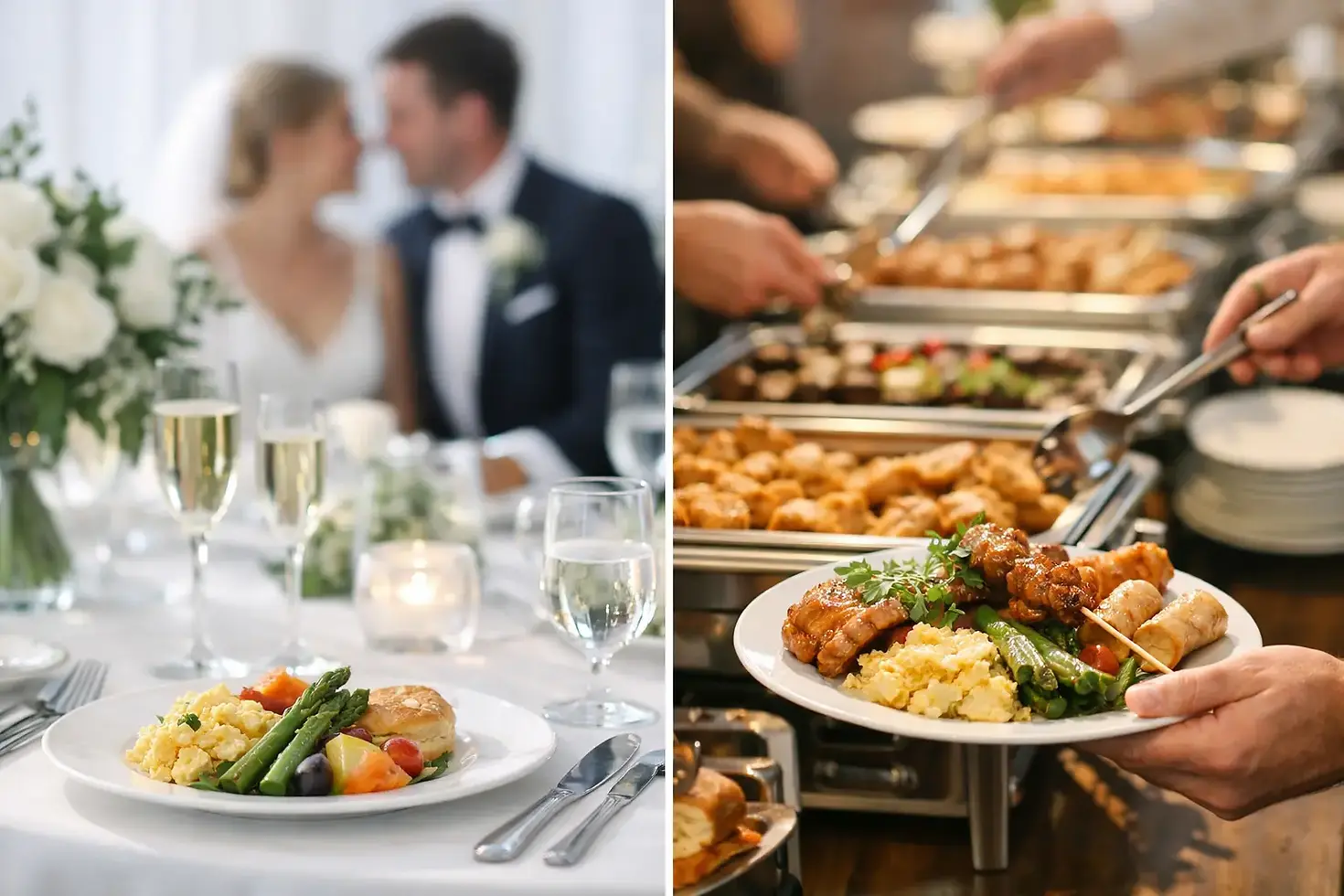
Wedding Breakfast Versus Evening Buffet
- Olivia Butler
- 21 hours ago
- 6 min read
The question of wedding breakfast versus evening buffet is rarely just about choosing between a plated meal and a table of tempting food. It shapes the rhythm of your day, how guests spend time together and the kind of atmosphere you create from the first toast to the final dance. The right answer depends on your guest list, venue, budget and, most of all, the celebration you want to host.
For some couples, sitting down to a beautifully served wedding breakfast is the moment the whole day comes together. For others, an abundant evening buffet is the relaxed, sociable food experience that keeps a party moving. Many weddings benefit from both, with each meal doing a different job.
What is a wedding breakfast?
Despite the name, a wedding breakfast is usually served after the ceremony, often in the early or mid-afternoon. The term comes from the idea of breaking the fast after the ceremony, rather than from the time of day or a menu of bacon and eggs.
Traditionally, it is the wedding’s main meal: a two- or three-course seated service, perhaps followed by coffee, petits fours and speeches. It gives everyone a clear point to gather, settle in and share a proper meal with the newly married couple.
A wedding breakfast can be formal, but it does not have to feel stiff. Shared platters, family-style feasts, colourful seasonal dishes and carefully designed vegetarian menus can all bring warmth and personality to the table. The key is that guests are seated and served as part of a planned occasion.
Why couples choose a seated wedding breakfast
A wedding breakfast creates a natural pause after the ceremony and drinks reception. Guests who may not know one another have time to talk, eat and enjoy the setting, while you have a chance to take in the room rather than trying to speak to everyone at once.
It also allows food to become a real part of the day rather than a practical necessity. Seasonal ingredients, considered presentation and courses built around your favourite flavours can make the meal feel personal without becoming overly formal. For a Sussex wedding, that might mean locally sourced produce at its best, generous sharing dishes or a menu that reflects the season of your celebration.
From an organisational point of view, a seated meal gives the day a dependable structure. Your caterer, venue team, photographer and toastmaster or coordinator know when guests will be in one place. That makes it easier to schedule speeches, turn around rooms and keep the transition into the evening smooth.
There are trade-offs. A formal three-course service takes time, particularly for larger guest numbers, and it needs enough tables, chairs, crockery and service staff. If your priority is a short daytime reception followed by an early, high-energy party, a long sit-down meal may not suit your plans.
When a wedding breakfast works best
It is particularly effective when most guests are attending from the ceremony onwards and you want them to feel properly hosted. It suits country barns, manor houses, marquees and venues where the meal is central to the experience. It is also a reassuring option for older relatives, young children and guests travelling a distance, who will appreciate knowing a substantial meal is included.
What makes an evening buffet different?
An evening buffet is usually served after the wedding breakfast, often once evening guests have arrived and the dancing is under way. It is designed to be relaxed, easy to eat and satisfying after a few hours of celebration.
This is not an afterthought. A well-planned buffet can be one of the most memorable parts of the evening, whether that means slow-cooked pulled meats, vibrant salads, handmade pizzas, grazing-style boards, hearty bowls of seasonal food or a late-night favourite with a more polished finish.
The buffet format lets people eat when they are ready. Guests can return to the dance floor, catch up with friends or choose the dishes that appeal to them. It brings a more informal energy, particularly when daytime and evening guest lists are different.
A buffet can also be a useful way to serve a wider range of tastes. Rather than asking every guest to choose one main course weeks ahead, you can offer a generous selection with clearly labelled dietary options. That flexibility is valuable, but it still needs careful planning to make sure every guest has enough choice and the service remains orderly.
Wedding breakfast versus evening buffet: the key differences
The biggest difference is purpose. A wedding breakfast is the main hosted meal, providing occasion, structure and a chance for everyone to dine together. An evening buffet is about sustaining the party, welcoming evening guests and giving people relaxed food around the celebrations.
Budget can look different too. A buffet may have a lower cost per head than a plated, fully served meal, but this is not guaranteed. The final figure depends on the menu, number of guests, staffing, equipment, hire items and whether food must be prepared or finished in a venue kitchen. A high-quality buffet with live cooking or premium ingredients can cost more than a simple seated menu.
Guest numbers matter. If you are inviting 70 people for the whole day and another 80 in the evening, you may choose a refined wedding breakfast for your day guests and a generous buffet that brings everyone together later. If all 150 guests are there from the ceremony, providing only a late buffet can leave people hungry during a long day unless you have planned substantial canapés and other food earlier on.
The style of service also affects your photographs and timetable. Plated courses create a calm, composed part of the day. Buffets create movement and a livelier feel, but queues need managing so guests are not all waiting at once. An experienced catering team will plan the layout, replenishment and timing around your space and guest flow.
Do you need both?
For a full-day wedding, the answer is often yes. A wedding breakfast and evening buffet are not competing meals when they are planned in proportion to the day. They serve guests at different points and prevent the common problem of people becoming hungry just as the evening celebrations begin.
That does not mean serving two large meals. If you are offering a generous three-course wedding breakfast, the evening food may be lighter: a colourful grazing table, mini desserts, savoury snacks or a late-night dish served in manageable portions. If your daytime meal is more relaxed, such as sharing platters or a substantial barbecue-style feast, the evening offering can be adapted accordingly.
Couples planning a later ceremony may take a different route. A drinks reception with generous canapés followed by an early-evening meal could replace the traditional afternoon wedding breakfast, with smaller late-night food if dancing continues. There is no requirement to follow a particular format, provided guests are clearly cared for throughout the day.
Avoid the hungry-gap problem
When deciding what to serve, map the timing honestly. Consider when guests will arrive, when the ceremony ends, when photographs happen, when speeches take place and when evening guests join you. A gap of four or five hours between the main meal and evening food can feel very long, especially if drinks are flowing.
Children, elderly relatives and guests with dietary requirements should be considered from the start rather than added to a final checklist. A good caterer can build suitable alternatives into the menu and service plan, so no one feels singled out or left with a less thoughtful meal.
Choosing the food around your wedding style
Start with the feeling you want guests to take away. If you imagine long tables, shared laughter and a moment of calm before the party, a seated wedding breakfast may be the heart of your day. If you picture an informal celebration where guests mingle freely and food appears as part of the fun, an evening buffet could take a more prominent role.
Then look at the practicalities. Ask your venue about kitchen facilities, available tables and chairs, access times, power, space for service and any restrictions on where food can be prepared. These details influence what can be delivered beautifully and efficiently, particularly at rural venues and marquee weddings.
Finally, be open about your budget and priorities. It is usually better to serve fewer courses exceptionally well than stretch the menu too far. Thoughtful, seasonal cooking and attentive service will be remembered long after the exact number of dishes has faded.
At Marks Meals, menu planning begins with how you want the day to feel, not a fixed package or a one-size-fits-all answer. Whether you choose a formal wedding breakfast, a relaxed evening buffet or both, the aim is the same: food that feels generous, considered and completely at home in your celebration.
A useful final test is simple: picture your guests at each stage of the day. If they are comfortable, well-fed and free to enjoy the people around them, your food plan is doing exactly what it should.


Comments